Blog
Where to Put a Hot Tub: 12 Best Tips for Choosing the Perfect Spot

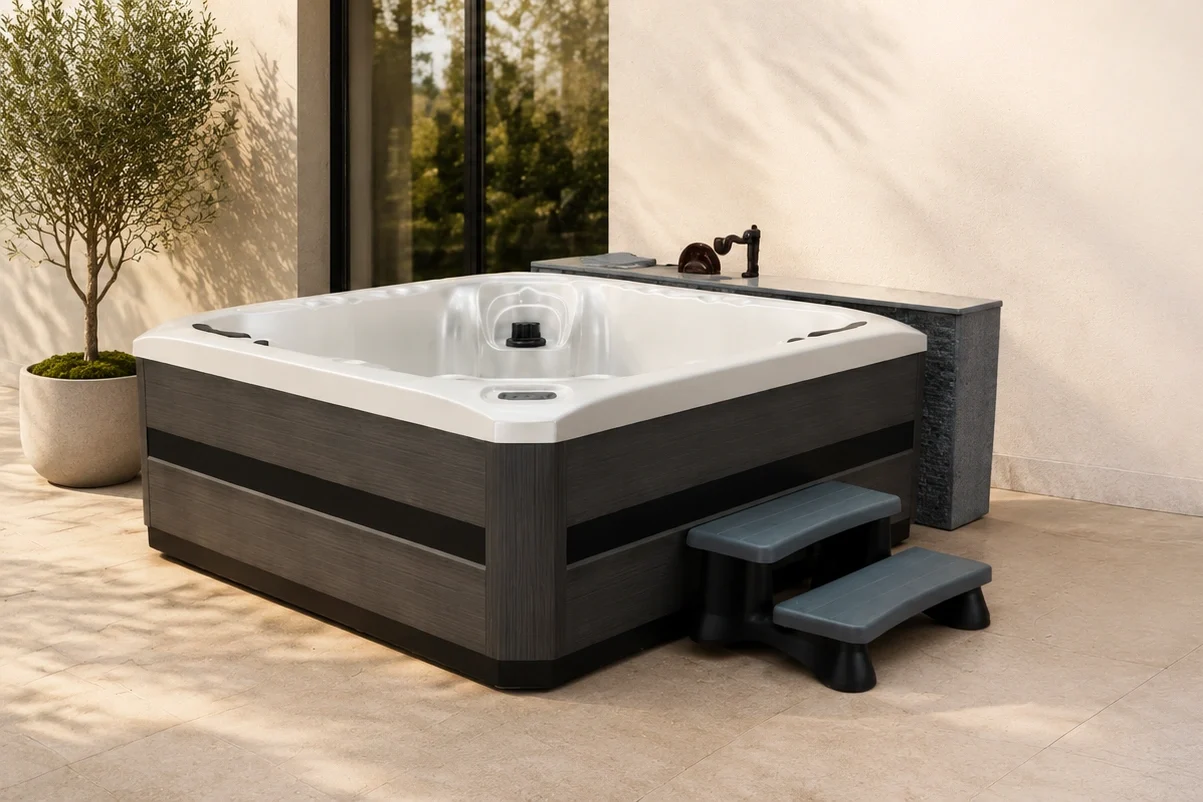
Choosing a model is the exciting part of buying a spa. Deciding where to put a hot tub is the part that decides whether you will actually use it. A spa that sits a few steps from the back door, on a solid base, with a little privacy and a nice view, gets used almost every evening. One tucked at the far end of the garden, on uneven ground and in full view of the neighbors, often does not.
Placement is also hard to change later. Once a hot tub is filled, wired and surrounded by steps and landscaping, moving it is a big job. This guide walks through the 12 best tips for choosing the right spot, preparing the base, planning power and drainage, and making sure your new spa can actually be delivered to where you want it.
Why Placement Matters Before You Buy
It is tempting to pick a hot tub first and worry about the location later. In practice, the location shapes almost every other decision:
- Size and layout. The space you have decides which footprints will fit, including room for steps and the cover.
- Base and foundation. A filled hot tub can easily weigh several thousand pounds once you add water and people, so the ground or structure underneath has to be ready for it.
- Power. Most full-size spas need a dedicated circuit, and the distance from your electrical panel affects the cost of installation.
- Delivery. Gates, steps, tight corners and narrow side passages can all stop a spa from reaching the spot you have chosen.
- How often you use it. Convenience, privacy and comfort make the difference between a daily ritual and an expensive garden ornament.
If you are still deciding on a model, our guide on how to choose a hot tub layout explains the difference between round, all-seat and lounger spas. Once you know roughly what size you want, use the tips below to work out where to put a hot tub so it fits your home and the way you live.
12 Best Tips for Where to Put a Hot Tub
1. Keep It Close to the Back Door
The most important tip is also the simplest: put the hot tub where it is easy to reach. On a warm summer evening a long walk across the lawn feels fine. On a cold, wet night in January it feels like a reason to stay inside.
A spot just outside the back door, on a patio or on a properly built deck, means you can step out in a robe, soak, and be back inside in seconds. It also makes it easier to check the water, keep an eye on children and carry out towels and drinks. If you live somewhere with real winters, our guide to using a hot tub in winter explains why a short, safe path to the spa matters so much in cold weather.
2. Start With a Solid, Level Base
Whatever spot you choose, the hot tub needs a base that is flat, level and strong enough to carry the full weight of the spa, the water and the people in it. The base also has to stay that way for years, without sinking, cracking or tilting.
Common options include:
- Concrete pad. The most common and most reliable choice. Spa manufacturer Bullfrog Spas recommends a reinforced concrete pad at least 4 inches thick as a general guideline, with a thicker slab for larger, heavier spas.
- Pavers or an existing patio. These can work well if they sit on a properly compacted base. Pavers laid on soft or poorly prepared ground can shift and settle under the weight.
- Compacted gravel. Drains well and is relatively easy to install, but it is harder to make perfectly level and keep level over time.
- A reinforced deck. Possible, but it must be designed or checked for the load. See the next tip.
Two things to avoid: placing a hot tub directly on grass or bare soil, which can sink unevenly, and relying on shims or wedges to level a spa on an uneven surface. An uneven base can stress the shell and cabinet. Always check the base requirements in the installation instructions for your specific model.
3. Have Your Deck Checked Before You Put a Hot Tub on It
A hot tub on a deck can look fantastic, especially on a raised deck with a view. But a deck that comfortably holds a barbecue, furniture and a group of friends is not automatically strong enough for a filled spa.
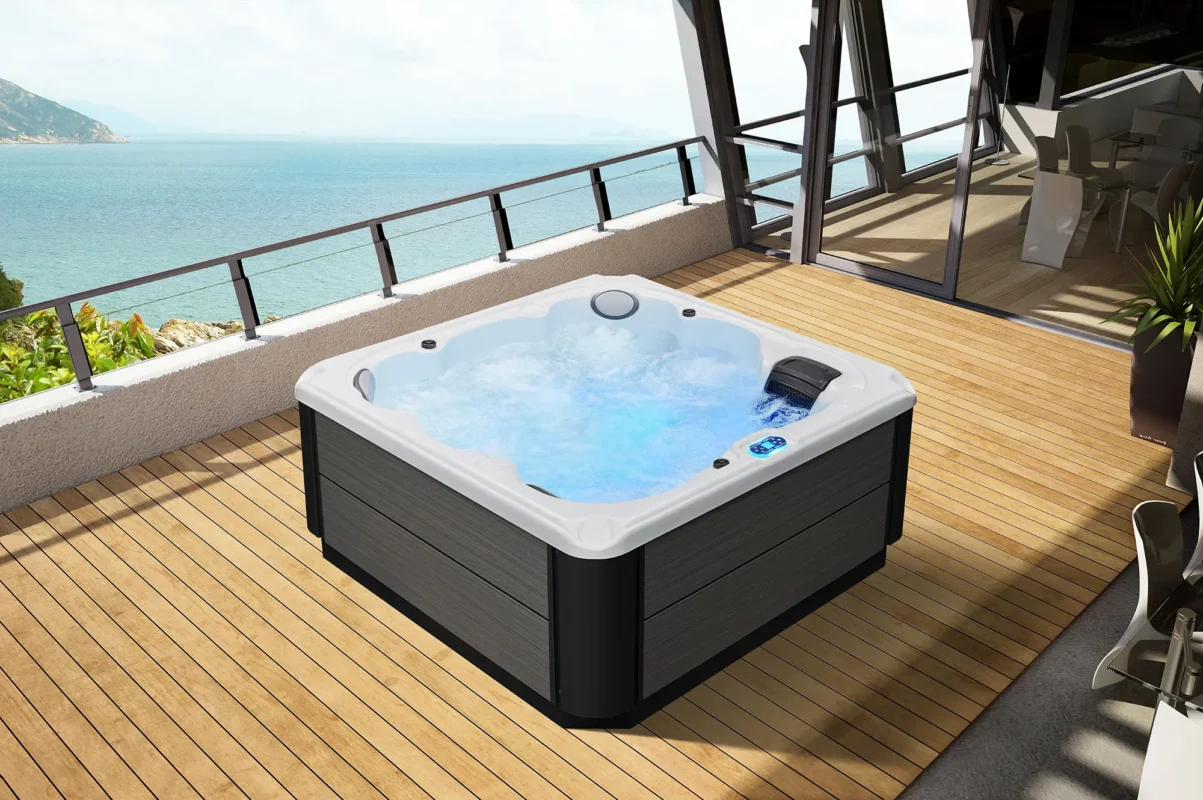
According to the American Wood Council, its standard residential deck guide is based on a uniformly distributed live load of 40 pounds per square foot, which is the figure used by the International Residential Code. A filled hot tub concentrates far more weight than that on a small area. If you want to put a hot tub on a new or existing deck, ask a structural engineer or qualified builder to confirm the design or specify the extra joists, beams and footings it needs.
4. Plan the Power Supply Early
Electrical work is one of the biggest factors in where to put a hot tub, and one of the easiest to overlook. Most full-size spas need a dedicated circuit with ground-fault protection, installed by a qualified electrician. The further the spa is from your electrical panel, the longer and more expensive the cable run.
- The Onyx X6 series and X8E require a 40 amp GFCI-protected circuit.
- The Onyx X5R is available in a 110V or 240V configuration, which can make installation simpler in some homes.
- In the United States, the National Electrical Code requires a disconnect for outdoor spas that is within sight of the spa and at least 5 feet from the water’s edge. Other countries have their own electrical rules.
Talk to an electrician before you finalize the location. They can tell you whether your panel has capacity, where the disconnect can go, and how the route of the cable affects the cost. Keep the spa well away from overhead power lines.
5. Think About Drainage and Water Access
Water will end up on the ground around your hot tub, from rain, melting snow, splashes and the occasional drain and refill. Choose a spot where that water flows away from the spa and away from your house, rather than pooling around the base.
- Avoid low spots in the garden where rainwater collects.
- Make sure the base slopes slightly away from the spa, or has drainage around it, without making the spa itself sit out of level.
- Check that a garden hose can reach the spa easily for filling and topping up.
- Plan where the water will go when you drain the spa, and check any local rules about draining treated water.
6. Choose the Right Level of Privacy
Privacy is one of the main reasons people love, or stop using, their hot tub. Think about who can see the spot from neighboring windows, gardens and balconies, and how you feel about that.
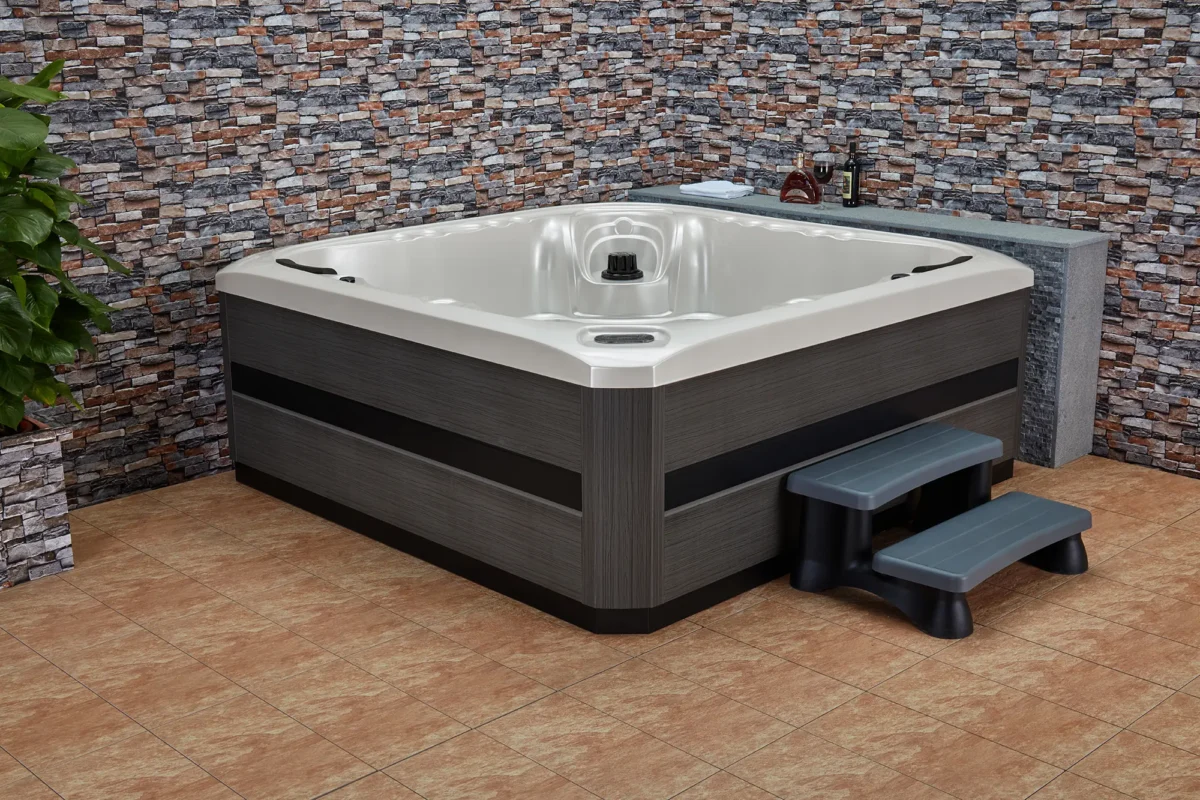
You can create privacy in several ways:
- Use existing walls. A spot beside the house or a garden wall instantly blocks one or two sight lines.
- Add screens or fencing. Slatted screens, trellis panels or a section of fence can be installed in a weekend.
- Build a pergola. A pergola with curtains or climbing plants adds privacy from above and side views, and gives you somewhere to hang lights.
- Plant around it. Evergreen shrubs and tall grasses soften the space, but keep them far enough away to avoid leaves in the water.
7. Use Walls and Corners for Shelter, but Leave Access
A sheltered spot is more comfortable to soak in and helps the spa hold its heat. Wind is one of the biggest causes of heat loss from the cover and cabinet, so a location protected by the house, a wall or a fence on the windward side makes a real difference, especially in colder climates.
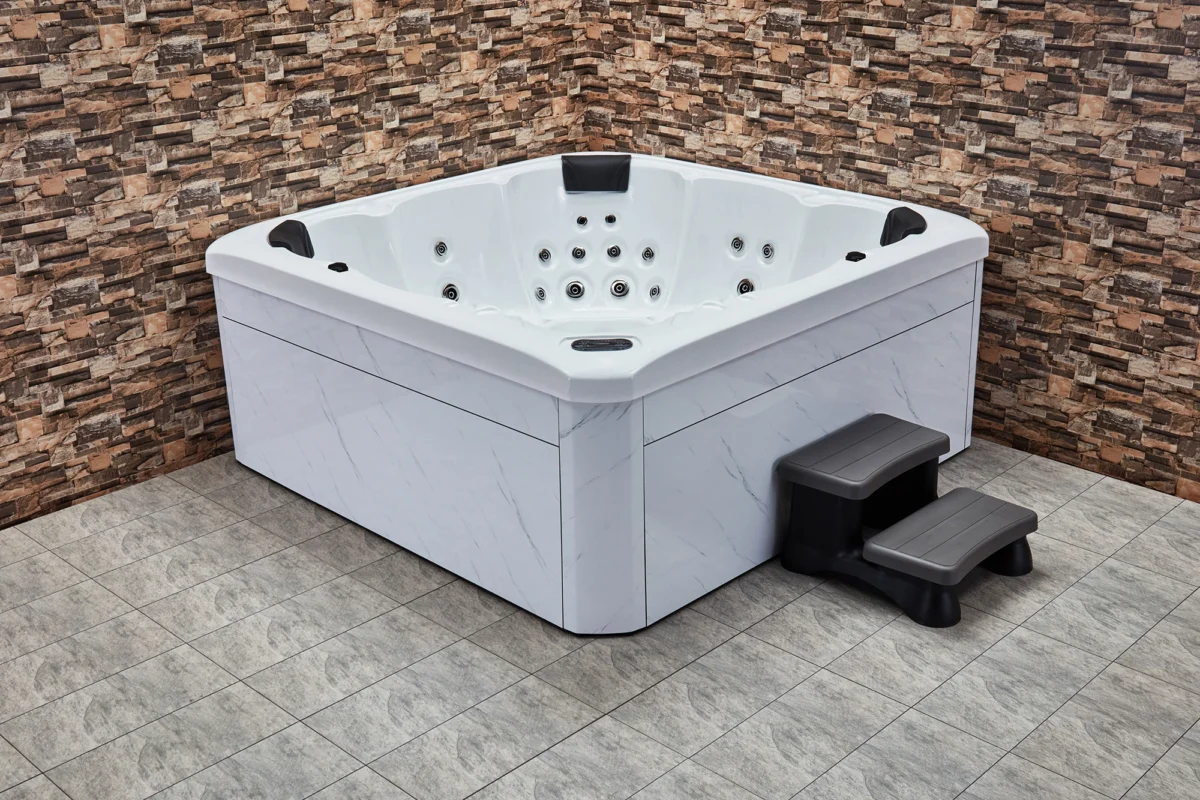
Corners and wall-side spots do have one catch: you still need to reach the spa’s equipment for servicing. Before you push a hot tub tight into a corner, check where the equipment access panels are on your model and make sure they stay reachable.
8. Leave Room for the Cover, Steps and Servicing
The footprint of the spa is only part of the space you need. When you measure, include:
- The cover. When folded back, it needs space behind or beside the spa, and more if you use a cover lifter.
- Steps. Most people use steps to get in and out comfortably. The Onyx X5R, X6 series and X8E all offer optional 2-step stairs.
- Service access. A technician needs room to remove panels and work on the pump, heater and controls. Pool and spa retailer Leslie’s suggests leaving extra space on at least three sides.
- Walking space. Leave enough room to walk around the spa safely with wet feet.
9. Watch Out for Trees and Roof Edges
Shade from a tree can be lovely in summer, but trees directly above a hot tub bring problems: falling leaves, needles, seeds and sap end up on the cover and in the water, and they clog filters. Roots can also lift and crack a concrete pad or patio over time. Place the spa a sensible distance from large trees, and away from the direction leaves usually blow.
Roof edges deserve the same thought. Rain and melting snow running off a roof without gutters, or snow and ice sliding off a pitched roof, can land on the cover and damage it. Avoid placing a hot tub directly under the eaves unless the roof edge is protected.
10. Think About the View, the Sun and the Lighting
Once the practical boxes are ticked, think about what you will see and feel from the water. A view of the garden, the sky or the landscape makes every soak more enjoyable. Consider when you are most likely to use the spa:
- Daytime soakers may want some shade from a pergola, umbrella or nearby building.
- Evening soakers will appreciate a spot with a view of the sunset or the stars, plus good lighting.
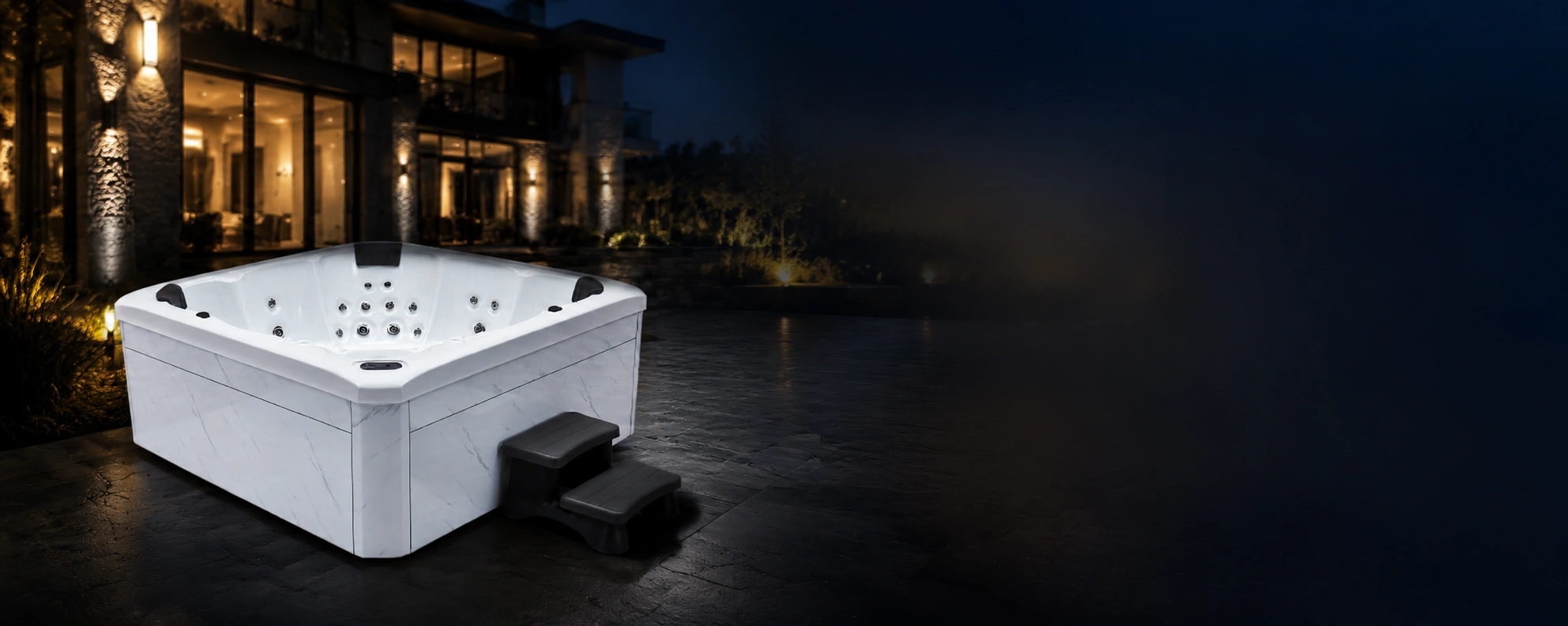
Plan lighting for the path between the house and the spa as well as around the spa itself. Onyx spas include LED lighting, and the X6 series and X8E add a multicolour main light plus water-level and corner or cabinet lights, so the spa itself becomes a soft light source after dark.
11. Check the Delivery Route
Many people choose the perfect spot and only then discover that the spa cannot get there. Before you order, walk the route from the street to the installation spot and measure:
- The narrowest point, including gates, side passages and door openings.
- Tight corners and turns.
- Steps, slopes and changes in level.
- Overhead obstacles such as branches, roof overhangs and cables.
Spas are often moved on their side, so ask for the delivery dimensions of your chosen model, not just its footprint. If the route is very restricted, fence panels or gates may need to be removed temporarily, and in some cases a crane is needed. As our Terms & Conditions explain, it is the customer’s responsibility to make sure the delivery location has suitable access, so it is worth checking early.
12. Check Local Rules Before You Build
Rules for hot tubs vary a lot between countries, regions and even neighborhoods. Before you pour a concrete pad or build a deck, check whether you need:
- A building permit for the pad, deck or any structure around the spa
- An electrical permit and inspection
- Minimum distances from property lines or other buildings
- Approval from a homeowners’ association or landlord
- Safety measures such as a lockable cover or fencing
Your local building department, and the electrician and builder you work with, can tell you what applies where you live.
How Much Space Does an Onyx Hot Tub Need?
Here are the footprints of the current Onyx range, taken from each product’s specifications. Remember to add space for the cover, steps, servicing and a safe walkway around the spa.
| Model | Layout | Size | Power |
|---|---|---|---|
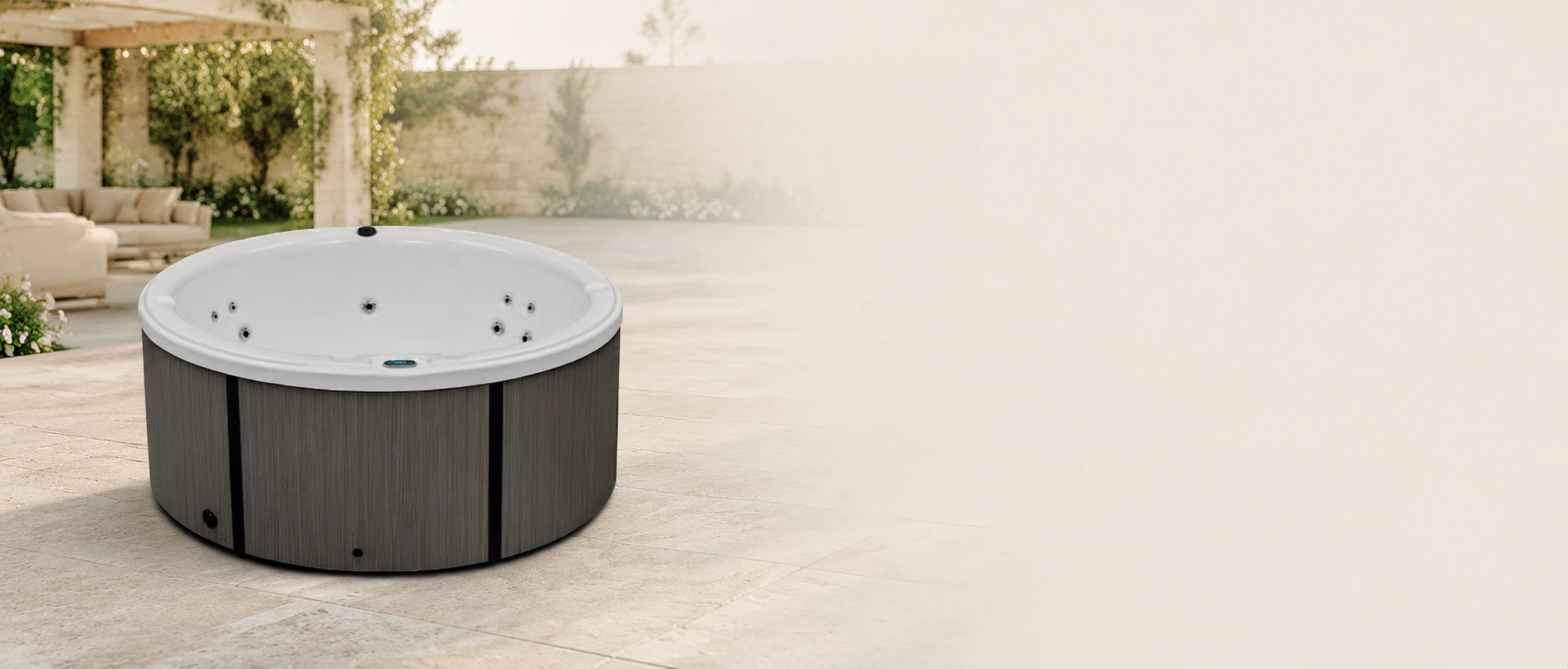
| X5R | 4 to 5 person round, all seats | 78″ round, 200 cm diameter, 90 cm high | 110V or 240V |
| X6R | 6 person | 85″, 216 × 216 × 92 cm | 40 amp GFCI |
| X6L | 6 person with full-length lounger | 85″, 216 × 216 × 92 cm | 40 amp GFCI |
| X6A | 6 person, all seats | 87″, 220 × 220 × 92 cm | 40 amp GFCI |
| X6D | 6 person, double lounger | 92″, 235 × 235 × 92 cm | 40 amp GFCI |
| X8E | 8 person, all seats, infinity edge | 116″ × 98″, 294 × 249 × 105 cm | 40 amp GFCI |
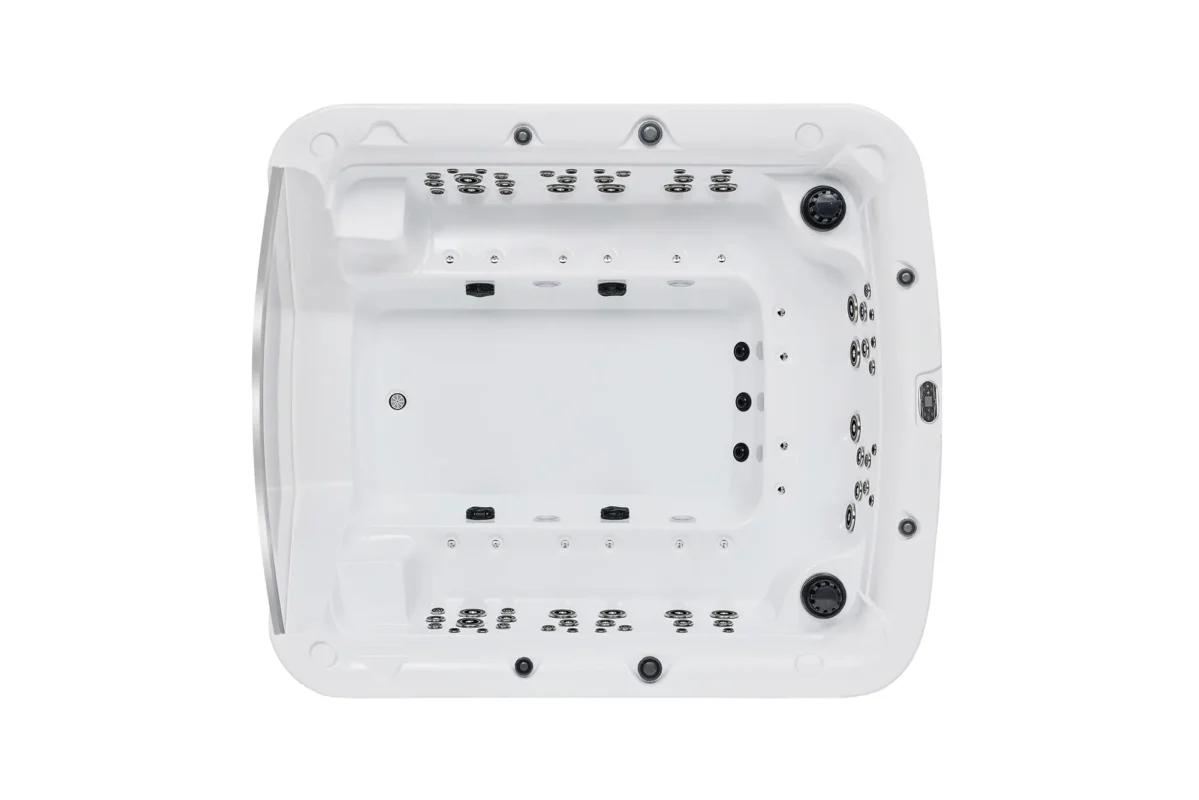
A simple trick before you commit: mark the footprint on the ground with tape, string or garden hose, then add the cover and steps. Stand in the spot at different times of day and look back at the house and the neighbors. It is the quickest way to see whether the location really works.
Where to Put a Hot Tub: Quick Placement Checklist
- Short, safe path from the back door to the spa
- Solid, level base: a reinforced concrete pad, well-prepared pavers, or an engineered deck
- Deck capacity confirmed by a structural engineer or qualified builder, if using a deck
- Electrician consulted about the circuit, disconnect location and cable route
- Water drains away from the spa and the house, with a hose that reaches the spa
- Enough privacy from neighbors and the street
- Shelter from the wind, with equipment access panels still reachable
- Space for the cover, steps, servicing and a safe walkway
- Away from overhanging trees and unprotected roof edges
- A view you enjoy, plus lighting for evening use
- Delivery route measured from the street to the spot
- Local permits and rules checked
Frequently Asked Questions
Can I put a hot tub on grass?
It is not recommended. Grass and soil can sink unevenly under the weight of a filled spa, which can stress the shell and cabinet. Use a solid, level base such as a reinforced concrete pad, well-compacted pavers or a properly built deck instead.
How thick should a concrete pad for a hot tub be?
A reinforced concrete pad at least 4 inches thick is a common guideline, with thicker slabs for larger, heavier spas. Always follow the installation requirements for your specific model, and ask a local contractor if you are unsure about your soil conditions.
Can my existing deck hold a hot tub?
Not necessarily. Many residential decks are designed for typical household loads, not for the concentrated weight of a filled hot tub. Have a structural engineer or qualified builder check the deck and recommend any reinforcement before you install a spa on it.
How close to the house can I put a hot tub?
Close to the house is usually the most convenient spot, as long as you leave room for servicing, the cover and a safe walkway, and water drains away from the building. Electrical codes and local rules may set minimum distances, for example for the electrical disconnect, so check with your electrician and local building department.
Do I need a permit for a hot tub?
It depends on where you live. Some areas require permits for the electrical work, the concrete pad or deck, or the spa itself. Check with your local building department before you start any work.
Get Help Choosing the Right Spot
The best place to put a hot tub is the one you will use every day: close to the house, on a solid base, with privacy, shelter and a view you love. Getting these details right before delivery makes installation smoother and means you can start enjoying your spa straight away.
Read our FAQ for more on delivery preparation and electrical requirements, or browse the full Onyx collection to compare sizes. If you are not sure which model will fit your space, get a quote and tell us about your space, and we’ll help you choose the right spa for it.